
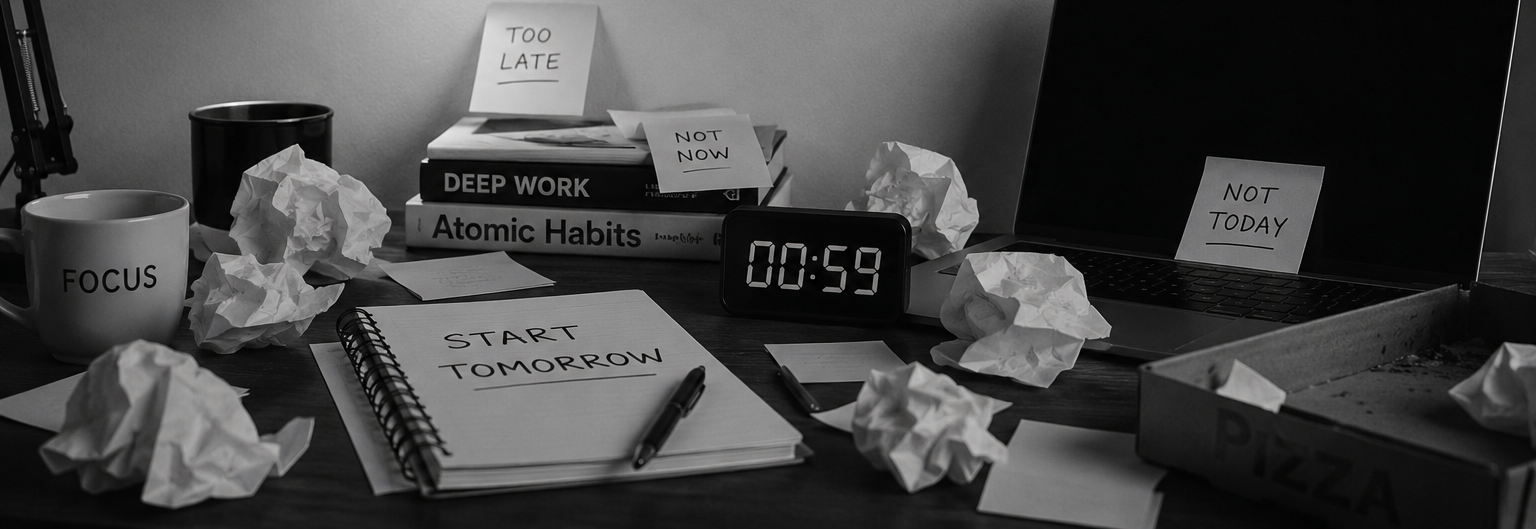
You had a plan. Then suddenly it was midnight.
Most people don’t procrastinate on purpose.
It usually starts with a quick break, a short video, or a task that somehow feels more urgent than the one we’re supposed to be doing. Before long, an hour has passed, the deadline is closer, and the original plan has been officially postponed.
But why does this happen so often?
One reason is that our brains naturally prefer immediate rewards over long-term benefits. Watching a video, checking social media, or chatting with friends provides an instant sense of satisfaction. Writing an essay, studying for an exam, or completing a project often requires effort before any reward appears. Faced with both options, the brain tends to choose the easier and more enjoyable one.
Procrastination can also be caused by fear. Sometimes we avoid tasks because they feel difficult, overwhelming, or important. The bigger the task seems, the easier it becomes to postpone it. Delaying the work gives us temporary relief, even though it often creates more stress later.
Perfectionism plays a role as well. Many people wait for the perfect moment to begin, hoping they will feel motivated, focused, and ready. The problem is that this moment rarely arrives. Instead of starting imperfectly, they delay the task altogether.
Another reason is that deadlines often feel distant. When something is due next week, it seems like there is plenty of time. As a result, our brains treat the task as a future problem. Only when the deadline becomes urgent do we finally feel enough pressure to act.
Ironically, many procrastinators become extremely productive when time starts running out. The approaching deadline creates a sense of urgency that increases focus and motivation. Tasks that felt impossible for days suddenly get completed in a single evening.
This doesn’t mean procrastination is a good strategy. While last-minute work can sometimes produce results, it usually comes with stress, lack of sleep, and unnecessary pressure. Understanding why procrastination happens is often the first step toward breaking the cycle.
After all, procrastination is not usually a problem of time management. More often, it is a problem of motivation, emotions, and the way we respond to challenging tasks.
Feeling called out?
If this article sounds familiar, you’re not alone.
Thousands of students, professionals, and serial deadline survivors struggle with the same cycle every day.
Want more procrastination tips?
Join the Procrastination Club and get updates, new articles, and occasional advice on how to stop putting things off.
Leave a Reply